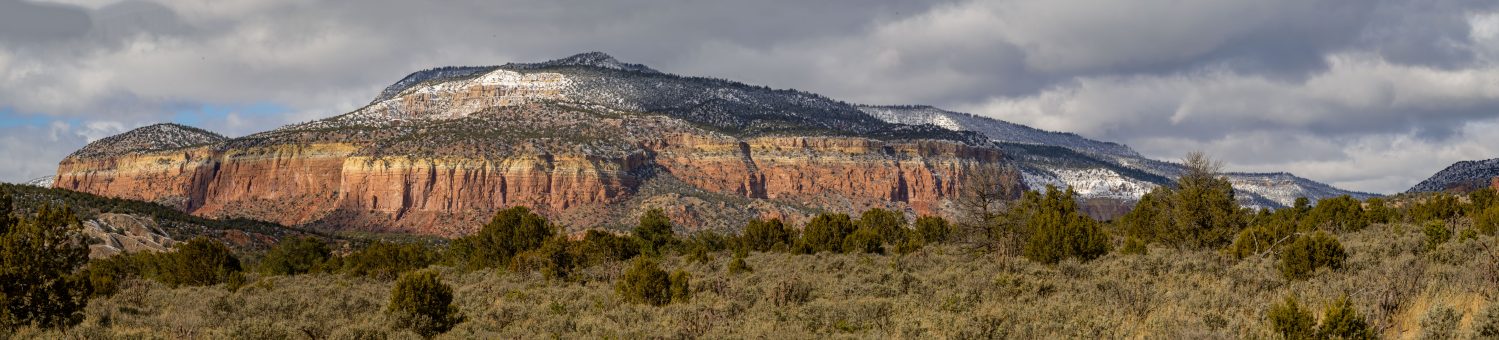
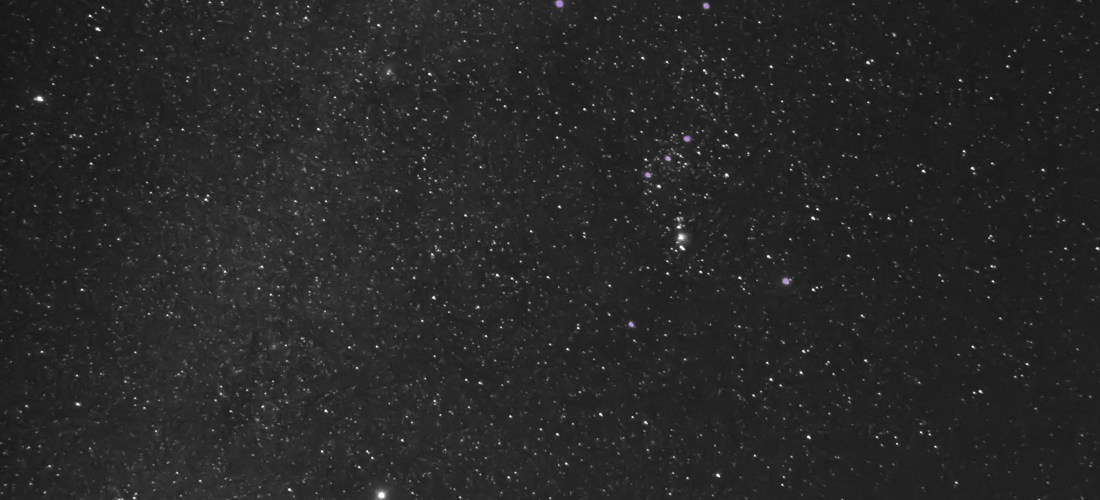
As anyone who knows me knows, I am not a night owl. Things in the night sky might be cool to look at, I don’t argue there, but is it really worth getting out of bed after 9 pm? And being cold for? Most of the time, not so for me, but camping is a caveat, since I’m probably going outside to pee anyway sometime during the night. Might as well try to take some photos, eh? Given my level of enthusiasm and dedication to the art of astrophotography, I haven’t had much practice and these are far from stellar shots, but I think I found a couple worth sharing at least.
These first two are from an ill-fated camping trip to Lincoln National Forest, near White Mountain Wilderness. M— and I took Perry and Althea down for the weekend, but spent all of Saturday dealing with a broken suspension on the van after hitting a rock just right. Luckily, we had backup friends who were coming down anyway, who brought some jacks and jack stands with them. Combining those tools with an adjustable crescent wrench a nice local on a 4-wheeler gave us, we actually managed to get the wheel unjammed from the wheelwell. While we missed the entire day of hiking we had planned, you couldn’t have asked for a more pleasant ambiance for a catastrophe. We stayed the second night with the rescue friends, when I got the two photos below.
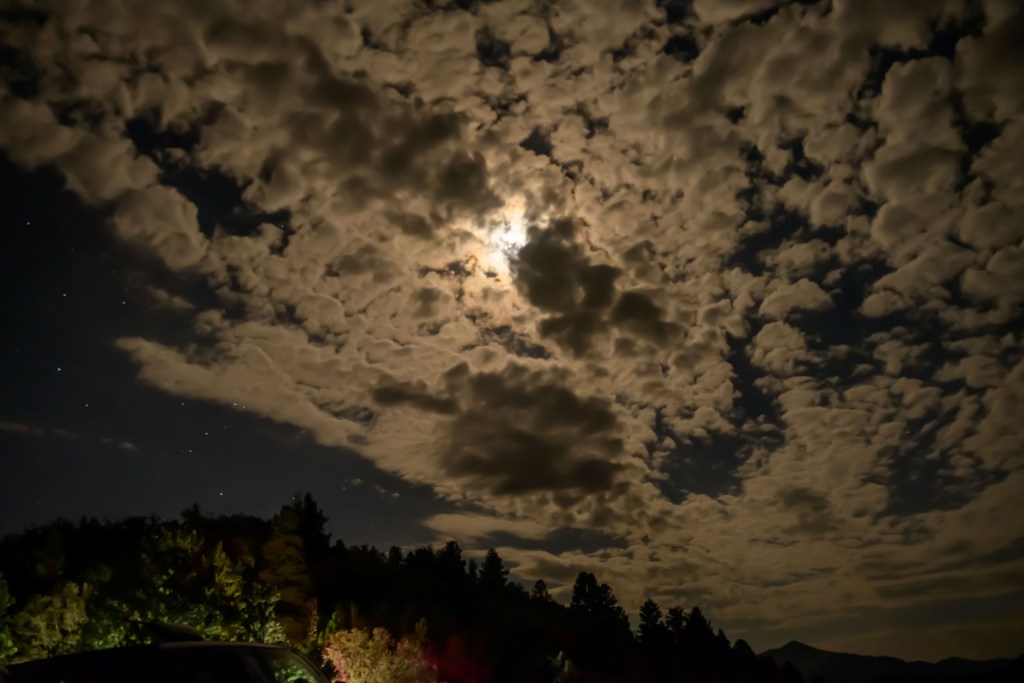
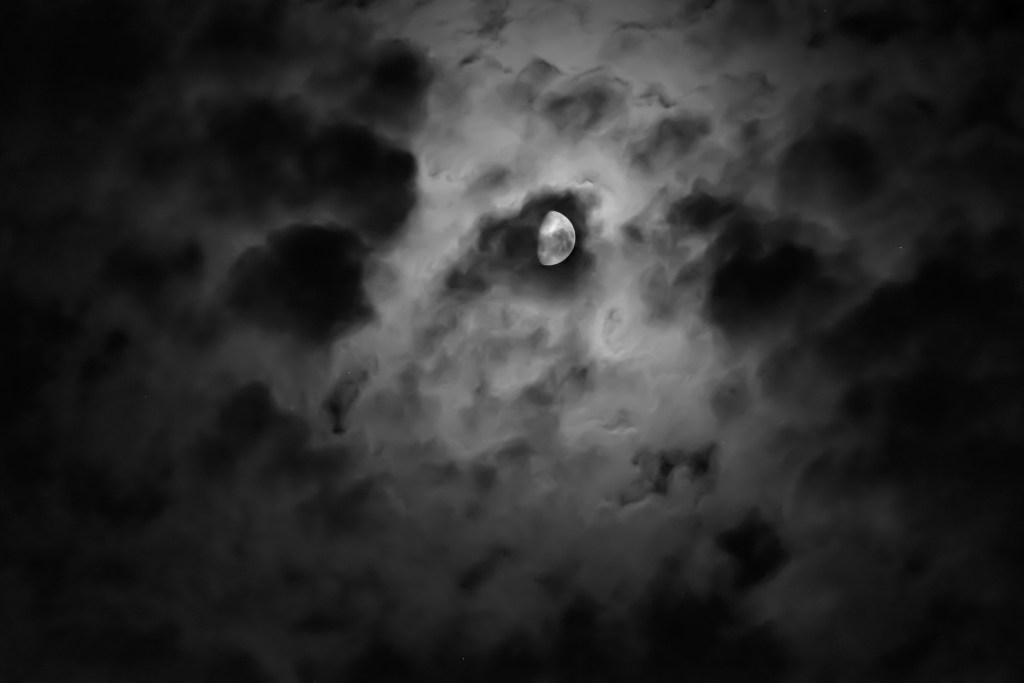
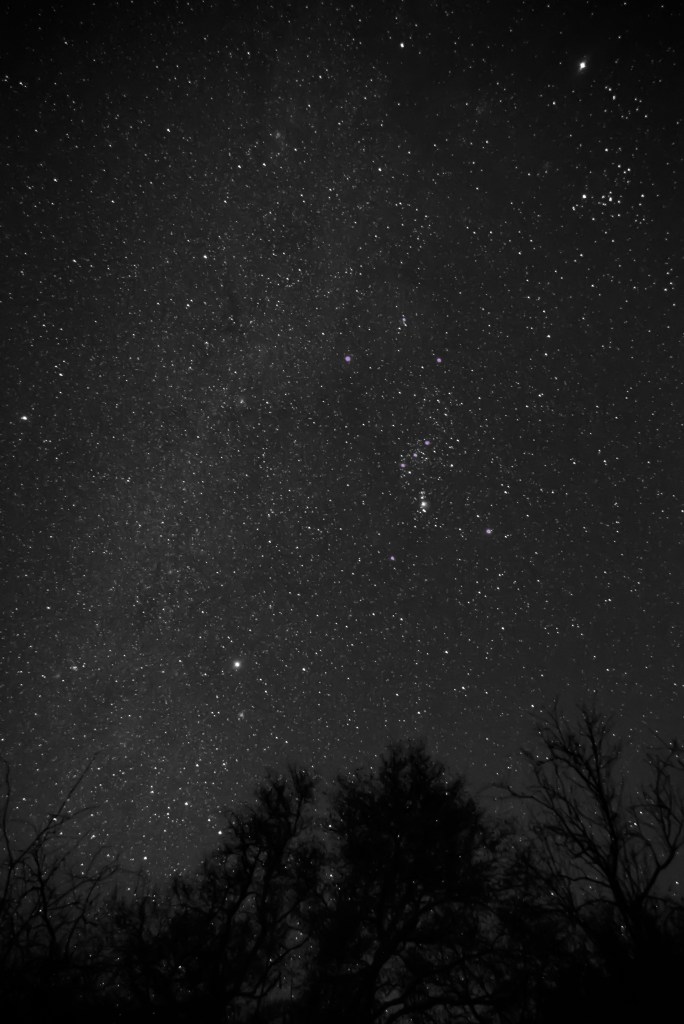
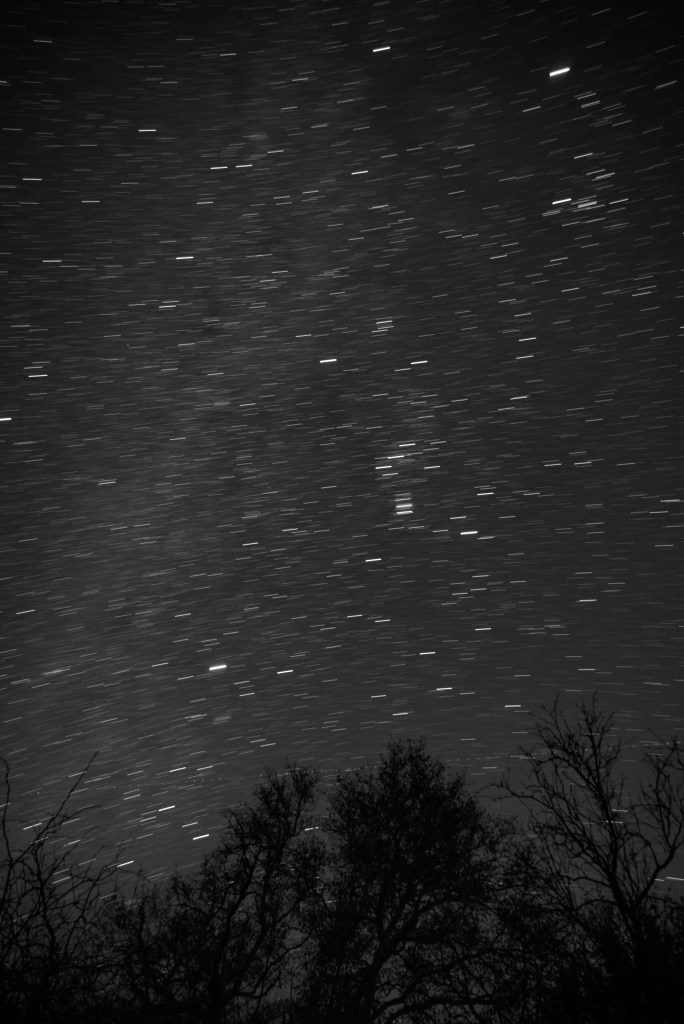
After promising to practice nighttime photography at home, and failing utterly, I went ahead and tried again on another camping trip south of Sedona. This time, I was up with an upset stomach digging cat-holes three times a night, but the weather was mild and I went ahead and got the camera out one of the times I was up anyway. I played around with the focus (turns out the camera will somehow go a little past infinity, to the detriment of the photo) and the trade off between ISO and exposure time. (Preliminary conclusion 1—if you want a sharp image, you need a shorter exposure time than I’d have guessed to avoid motion blur of the stars. 10 s with ISO 4000 and heavy denoising in CameraRaw later worked decently.) I also gave an initial attempt at long exposures to capture the star sweeps. (Preliminary conclusion 2—if you want long enough trails to look purposeful, you need a longer exposure time than I had patience for; I found 309 s as a lower bound.)
 EMC Photography, Ph.D.
Elizabeth,
Theres a traditional rule of thumb that you divide the focal length youre shooting with into 300, and the inverse of the result is the max exposure time (i.e., slowest shutter speed) at which youll have minimal (aka acceptable) motion blur from the earths rotation. For example, if youre shooting at 30mm, your slowest shutter speed would be 1/10 sec. If youre shooting at 50mm, its 1/6 sec. And that rule holds only for a full frame. For APS-c, your criteria would be about 450 => so that with a 50mm lens, youd be shooting at about 1/9 sec.
Of course, with no near foreground, you need no depth of field and can shoot at max aperture. So then its just a matter of sensor noise at high ISO.
Also, Ive found that I can manually focus on a distant light (e.g. car headlight, distant house light, etc.), and then leave the focus unchanged. Of course, if you change the focal length (i.e., zoom), the infinity focus shifts and you must refocus at the new focal length.
Cheers,
Jerry
Sent from Mailhttps://go.microsoft.com/fwlink/?LinkId=550986 for Windows
LikeLike